Poets only excuse their egotistical nature by saying that
only those excessively possessed by superiority must be
ever compelled to enter the betraying labyrinth of effort.
- Greek Poet, Telbus of Tripoli.
Edgar Allan Poe invented the first true mystery, followed by two
more tales using the same detective Dupin. 'Murders in the Rue Morge',
The Mystery of Marie Roget', and 'The Purloined Letter'. Poe's labyrinth
path was followed by Juan Borges, Chris Nolan, and Christopher Manson
(on release of his third maze.) Borges wrote 'The Garden ofForking
Paths', 'Death and the Compass' (a title from Poe), and 'I.H.B. Dead in
his Labyrinth'. Nolan's three mysteries are: 'Following', 'Memento', and
'Inception'(also the trilogy of the mystery man Batman). Poe wrote
about cryptology in 'The Gold Bug' as well as 'A Few Words on Secret
Writing'. Nolan showed his version of coded writing in 'The Prestige' (remember the key
word Tesla?).
Poe's bird, the most famous of all, is
The Raven. Borges wrote of the Phoenix. Nolan had his yellow canaries in
The Prestige. Manson has his birds as well. (A white Raven claims one,
but for me the Black Ravens are on page 24. There are birds on pages 21,32, and 44 and Magpies in the text of 34; even a scarecrow on page 35. The reader may be one also. Unless...) In the room by room, you may discover a wren, a dove, a coot, and a loon if you have a livid, I mean vivid, imagination.
Poe's play on words was a term we now use in all mysteries. He gave us a clue. He used the term very proficiently in 'The Murders in the Rue Morge'. Here is a brief explanation of Poe's work: A '
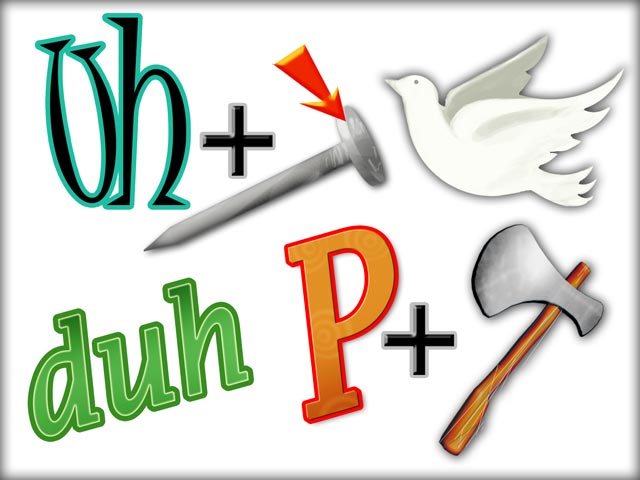
clew' is a ball of thread, as used especially in reference to Theseus who used a clew of red thread to trace his path into, and thus, out of the Minotaur's labyrinth. As the story goes he tied the end to a nail at the entrance before proceeding. (We all did this with our journey into the book, right?) A '
clue' is something that leads out of a maze, or now commonly used to solve a mystery, be it a maze, a murder, or any perplexing problem. In the Rue Morgue mystery, our main character Dupin solves the mystery in part, by finding an altered nail. The nail used in reference, not only to Theseus (as in tracking back to the murderer's path of action) but as in a play on words; '
clou' being the French word for nail. [Thanks in part to "The American Face of Poe" by Stephen Racman.]
One step further is the series by Borges, inspired by Poe's work. He further uses the red thread in his stroy, outlining the path of the murderer on a map with a red triangle. But further, his characters Lonnrot, where Lonn is Swedish for 'secret' and rot is German for 'red'. The suspect, Red Scharlach is also German in that Scharlach is 'scarlet', thus Red Scarlet is chased by Secret-Red. [Thanks in part to John Irwin's 'Mystery to a Solution'.] Borges also said in an interview about his "mazes": "
I know of a Greek maze that's a single straight line." (Sounds similar to Manson's "a hallway with no end.")
I prefer to think that Chris Nolan used a white line for his path through several mazes in Inception. The white lines of the road and the obscurity of using a white path in a snowbound mountain. But, that is just my imagination perhaps. Leonard was on a path of fate as well, in Memento (or Teddy, depending on how you look at it. Never hang out with a guy whose tattoo reads, "Kill" followed by your name.)
Dupin is also seen if you turn to page 12 "DU" then 8 'PIN' (bowling pin).